
Building Connection

Main Menu

  • Articles
    • Columns
    • Features
  • News
    • Business Matters
    • Design
    • Fire safety
    • Heritage Trades
    • Materials
    • Prefabrication
    • Research
    • Safety
    • Sustainability
  • Products
    • Adhesives and sealants
    • Bricks
    • Cladding
    • Concrete
    • Doors
    • Fences
    • Flooring
    • Interiors
    • Joinery
    • Pest control
    • Plumbing
    • Roofing
    • Steel
    • Storage
    • Technology
    • Tiling
    • Timber
    • Tools & clothing
    • Vehicles
    • Walls
    • Waterproofing
    • Windows
  • Resources
    • Building TV
    • Standards and Regulations

logo

Building Connection

  • Articles
    • Columns
    • Features
  • News
    • Business Matters
    • Design
    • Fire safety
    • Heritage Trades
    • Materials
    • Prefabrication
    • Research
    • Safety
    • Sustainability
  • Products
    • Adhesives and sealants
    • Bricks
    • Cladding
    • Concrete
    • Doors
    • Fences
    • Flooring
    • Interiors
    • Joinery
    • Pest control
    • Plumbing
    • Roofing
    • Steel
    • Storage
    • Technology
    • Tiling
    • Timber
    • Tools & clothing
    • Vehicles
    • Walls
    • Waterproofing
    • Windows
  • Resources
    • Building TV
    • Standards and Regulations
ConcreteProducts
Home›Products›Concrete›Boral pioneers low-carbon concrete using Australian calcined clay

Boral pioneers low-carbon concrete using Australian calcined clay
By Casey McGuire
February 16, 2026
0
0

Boral has developed a low-carbon concrete that incorporates Australian calcined clay, becoming the first Australian company to achieve this milestone. The innovation represents a significant step in creating next-generation solutions to reduce carbon emissions in concrete production and infrastructure.

The concrete mixes, available in binary and triple-blend formulations, were successfully tested at Boral’s cement operations in Maldon and performed comparably to traditional low-carbon concrete.

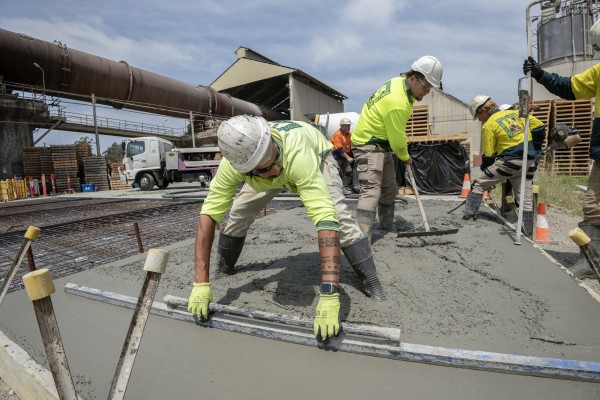
Customer trials included a test slab supplied to Victoria’s North East Link and the University of Melbourne, which used clay recycled from excavated soil on-site.

“Boral’s calcined clay concrete is a major step forward in our innovation journey and progress towards Net Zero. This work ensures we can continue to offer sustainable solutions for Australia’s building and infrastructure needs,” Borel chief executive and managing director Vik Bansal says.

Boral says early feedback from industry partners has been positive, signalling strong interest in adopting calcined clay concrete for future construction projects.

“From the lab to successful field trials, our work demonstrates that calcined clay concrete is not just a concept; it works at scale. By developing a range of next-generation low-carbon products with different blends, we are future-proofing supply and supporting the industry’s decarbonisation goals,” Boral head of sustainability and innovation Dr Ali Nezhad says.

The development followed extensive laboratory testing and large-scale field trials, confirming the viability of calcined clay as a supplementary cementitious material (SCM). The work builds on technical feasibility studies Boral began in 2024 in partnership with the University of Technology Sydney, Transport for NSW and Calix, supported by the SmartCrete CRC and an Australian Government grant. Preliminary studies were conducted from 2020 to 2024.

Previous Article

HIA urges increased apprentice training to support ...

Advertisement

SIGN UP TO OUR NEWSLETTER

Advertisement

Latest posts

  • Boral pioneers low-carbon concrete using Australian calcined clay
  • HIA urges increased apprentice training to support housing supply
  • Natty Workwear releases Can’t Go Wrong collection
  • ABCB releases NCC 2025 preview, highlighting key updates in water, fire and energy
  • HIA warns work-from-home bill would add pressure to small builders
  • Home
  • About Building Connection
  • Download Media Kit
  • Contribute
  • Contact Us